Unlike Naples, where pizza follows a more unified tradition, Rome offers many styles: crispy, thin, airy, sliced, round, bakery-style, and street food friendly. You can eat it standing at a counter, folded in a paper while walking through a piazza, or sitting at neighborhood pizzeria with a cold beer and the happy chaos of Roman dinner around you.
Roman Pizza: History, Styles, and What Makes it Different
Published on

That variety is exactly what makes Roman pizza so fascinating. It reflects the city itself: practical, creative, layered with history, and deeply connected to everyday life.
For travelers visiting Rome, especially if it is your first Italian food adventure, Roman pizza is one of the best ways to understand how locals really eat. Everything is about texture, timing, bakeries, neighborhoods, and that unmistakable crunch Romans love.
In this guide, we will explore the history of Roman pizza, its different styles, what makes it unique, and how it compares to Neapolitan pizza. And yes, by the end, you may feel very ready to learn how to make it yourself.
The History of Roman Pizza
Roman pizza has a long story, but it is important to begin with one simple idea: modern pizza is not the same thing as ancient Roman flatbread.
Ancient Romans did not eat pizza in the way we know it today. There was no tomato sauce, bacause tomatoes arrived in Europe much later from the Americas. Still, the roots of Roman pizza can be traced back to simple flatbreads, focaccia-like breads, and grain-based foods baked in hot ovens and eaten as part of daily life.
In Ancient Rome, bread was essential. It was practical, filling, and easy to share. Flatbreads could be topped or flavored with olive oil, herbs, cheese, or whatever was available. They were not "pizza" in the modern sense, but they helped create the foundation for a city that would always have a deep love for baked dough.
Over the centuries, Roman bakeries became central to local food culture. The neighborhood forno was not just a place to buy bread. It was part of the rhythm of the day. People stopped by for breakfast, snacks, lunch, and something quick to bring home. This bakery culture helped shape the way Roman way of eating pizza: simple, flexible, and often enjoyed outside a formal restaurant setting.
After World War II, Rome changed quickly. The city grew, daily life became faster, and people needed affordable food that could be eaten on the go. This is when pizza al taglio, or pizza by the slice, became one of Rome's great food icons.
Baked in large rectangular trays, cut with scissors, sold by weight, and topped in endless ways, pizza al taglio turned into a daily food. It was no longer only something to enjoy at a pizzeria in the evening. It became lunch, an afternoon snack, a quick bite between errands, ora a late-night treat after a walk through the city.

What Makes Roman Pizza Different?
This is the heart of Roman pizza story.
When people ask "What makes Roman pizza different", the answer usually begins with texture. Roman pizza is often known for being thin, crispy, light, and pleasantly crunchy. It is pizza with bite. Pizza that makes a sound when you fold it, break it, or take that first perfect mouthful.
The classic pizza tonda romana, or round Roman pizza, is usally very thin in the center, with crisp edges and a dry, delicate crunch. Compared to Neapolitan pizza, it is less soft and pillowy. It is more about crispness than chew.
Roman pizza dough often uses a longer fermentation process, which helps develop flavor and makes the final result easier to digest. For round Roman pizza, the dough is generally stretched thin and baked until crisp. It tends to have a lower hydration than Neapolitan pizza, which helps create that famous crucnhy texture.
However, Roman pizza is not just one dough style. Pizza al taglio, for example, often uses a higher-hydration dough and a longer rise, creating an airy interior with a crisp base. This is why it is so important not to think of Roman pizza as only "thin crust pizza". Rome has several pizza personalities, and they all deserve a seat at the table.
Still, across the different styles, there is one thing Roman pizza does beautifully: balance. The best versions are crisp but not dry, light but satisfying, flavorful but not overloaded.
In Rome, the dough is not just a vehicle for toppings. It is the star.
The Different Types of Roman Pizza
Saying "Roman pizza" is a little like saying "Roman pasta". It points to a tradition, but inside that tradition there are different styles, moods, and occasions.
Some Roman pizzas are made for a long dinner with friends. Others are made to be eaten standing outside a bakery, still warm, with olive oil on your fingers and a view of a sunny street corner. To really understand pizza in Rome, you need to know the main types.
Pizza Romana: Round Roman Pizza
Pizza Romana, also called Pizza Tonda Roman, is the classic round pizza you will find in traditional Roman pizzerias.
It is usually served at dinner, often in a lively, casual restaurant where the menu is simple, the tables are close together, and the sound of plates, voices, and laughter fills the room. This is Roman pizza at its most social.
The crust is very thin, especially in the center. The edges are crisp rather than puffy, and the diameter is often larger than you might expect. A good round Roman pizza should feel light, crunchy, and easy to eat from the first slice to the last.
Common toppins include tomato and mozzarella, anchovies, mushrooms, sausage, prosciutto, artichokes, and seasonal vegetables. You may also find Roman classics with zucchini blossoms, especially when they are in season.
This is not the kind of pizza that bends softly under a heavy blanket of toppings. It is more restrained. The beauty is in the crackle of the crust, the freshness of the ingredients, and the way everything stays in balance.
Order it with a cold beer, share a few friend starters like supplì, and you have on of the most Roman dinners imaginable.
Pizza al Taglio
If round Roman pizza belongs to the pizzeria, pizza al taglio belongs to the street.
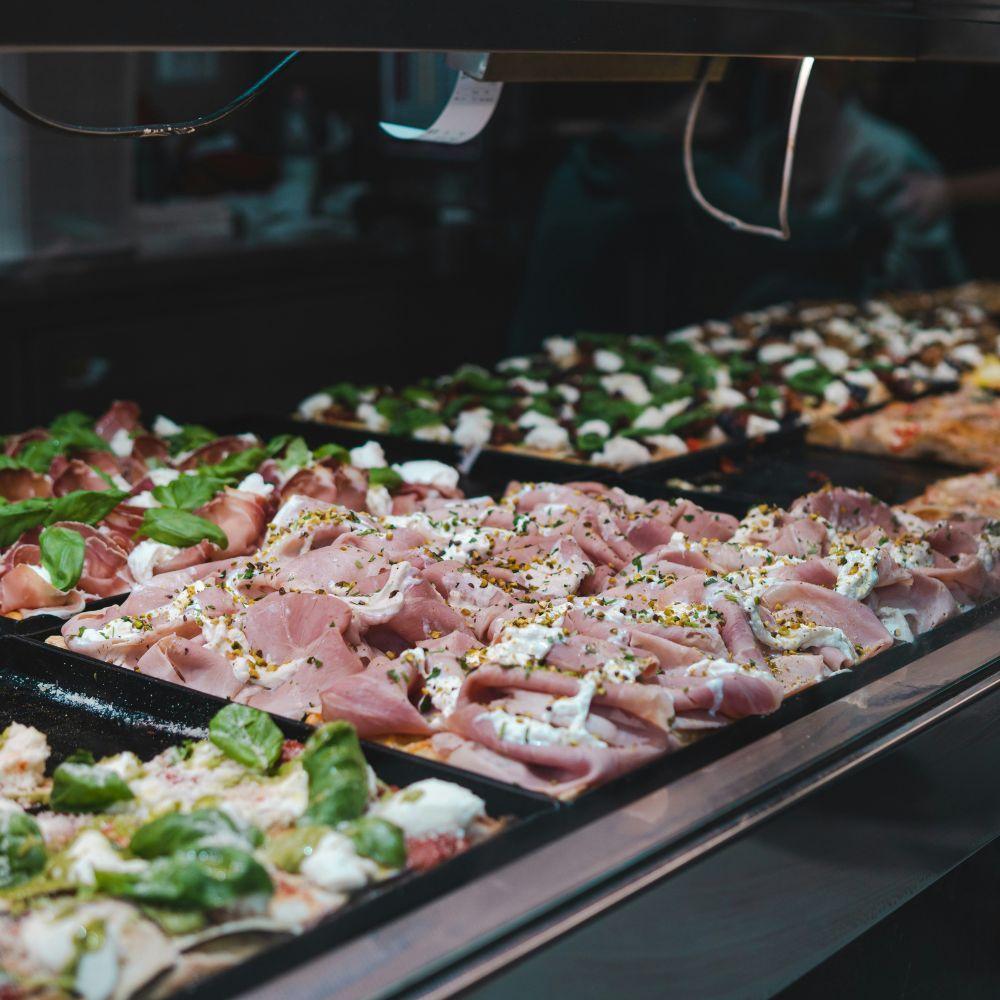
This is Rome's famous pizza by the slice, and it is one of the city's most iconic everyday foods. You will see it in bakery windows and casual pizza shops all over the city: long rectangular trays covered with colorful toppings, waiting to be cut to order.
The process is simple. You point to the pizza you want, show how big a piece you would like, and the staff cut it with scissors. Then it is weighed, warmed if needed, wrapped in paper, and handed to you like a small edible trasure.
Unlike pizza tonda romana, pizza al taglio often has a more hydrated dough. That gives it an airy, open crumb inside while keeping the base crisp. The result is a wonderful contrast: soft and light in the middle, crunchy underneath.
The topping combinations can be endless. You might find potatoes and rosemary, tomato and oregano, zucchini flowers. mushromms and sausage, mortadella, fresh cheese, roasted vegetables, or even seasonal specials that change throughout the year.
For travelers, pizza al taglio is a pefect Roman food experience because it is flexible. You can try two or three kinds without sitting down for a full meal. It is also a delicious way to explore the city like locals do: one slice at a time.
Pizza Bianca
One of Rome's simplest pleasures.
At first glance, it may not look dramatic. There is no tomato sauce, no bubbling mozzarella, no mountain of toppings. Just golden baked dough, olive oil, salt and a texture that can be soft, chewy, crisp, or all three depending on the bakery.
But do not understimate it.
Pizza bianca is a Roman bakery staple and a beloved part of daily life. Locals might eat it plain as a snack, buy it warm from the forno, or fill it with mortadella for one of the most satisfying sandwiches in the city. The combination of warm pizza bianca and thin slices of mortadella is simple, rich, salty, and incredibly Roman.
It shows how Roman food often works: a few good ingredients, handled well, can become unforgettable.
Trapizzino and Modern Roman Pizza Innovations
Rome loves tradition, but it is not stuck in the past.
One of the best examples of modern Roman pizza creativity is the trapizzino, a newer street-food invention that combines pizza dough with classic Roman and Italian fillings. It is shaped like a small triangular pocket and filled with dishes that might remind you of a Roman home kitchen: meatballs, chicken cacciatore, eggplant parmigiana, or other slow-cooked favorites.
The trapizzino is not traditional Roman pizza in the old sense, but it is very Roman in spirit. It is practical, flavorful, fun to eat, and rooted in familiar recipes.
This is what makes Rome’s pizza culture so exciting. It protects tradition, but it also leaves room for new ideas. In a city where ancient ruins sit beside modern cafés and scooters zip past Renaissance palaces, that feels exactly right.
What’s in a Roman Pizza?
Roman pizza may look simple, but every detail matters.
The base, the fermentation, the flour, the toppings, and the oven all shape the final result. A great Roman pizza does not need to be overloaded. In fact, the most memorable ones are often the most balanced.
Roman Pizza Base
The base is where Roman pizza begins.
For round Roman pizza, the dough is usually made with flour, water, yeast, salt, and sometimes olive oil. The dough is stretched thin and baked until crisp. The goal is not a tall, soft crust, but a light and crunchy one.
Fermentation is crucial. A longer rise helps build flavor and improves the structure of the dough. It also creates a pizza that feels lighter, which is something many travelers notice after eating good pizza in Rome. You can enjoy it without feeling like you need to cancel the rest of your afternoon.
Flour choice also matters. Different flours absorb water differently and create different textures. Roman pizza makers know how to choose and handle flour to get the right balance between strength, crispness, and lightness.
With pizza al taglio, the dough is often more hydrated and handled differently. This helps create that airy interior and crisp bottom that make Roman slice pizza so addictive.
In every style, texture is the main goal. Roman pizza should not be heavy or soggy. It should feel alive in your hands: fragrant, structured, and ready to crunch.
Traditional Roman Pizza Toppings
Roman pizza toppings are usually about balance rather than excess.
While American-style pizzas often celebrate abundance, Roman pizza tends to be more restrained. That does not mean boring. It means each ingredient has a purpose.
Some classic Roman pizza toppings include:
- Mozzarella and anchovies
- Zucchini blossoms
- Potatoes and rosemary
- Mushrooms and sausage
- Tomato and oregano
- Artichokes
- Prosciutto
- Mortadella
- Fresh seasonal vegetables
Potatoes and rosemary are especially beloved on pizza al taglio. Thin slices of potato become soft and golden in the oven, while rosemary adds that woodsy aroma that makes the whole slice feel rustic and comforting.
Zucchini blossoms are another favorite, often paired with mozzarella and anchovies. It is a combination that may surprise some American travelers at first, but it captures something essential about Roman cooking: salty, creamy, delicate, and seasonal all at once.
A good Roman pizza does not try to do everything. It chooses a few things and does them well.

Roman Pizza vs Neapolitan Pizza: What’s the Difference?
There is no need to choose a winner between Roman pizza and Neapolitan pizza.
That would be like choosing between Rome and Naples themselves. Both are beautiful, intense, delicious, and completely different. Each pizza tells the story of its own city.
Still, the differences are very real, and understanding them helps travelers appreciate what they are eating.
Neapolitan pizza is usually soft, round, and elastic, with a puffy cornicione, or raised crust. It cooks very quickly in an extremely hot wood-fired oven. The center is tender and sometimes slightly wet, especially with classic toppings like tomato, mozzarella, and basil.
Roman pizza tonda, by contrast, is thinner and crispier. The crust is flatter, the center is firmer, and the overall eating experience is crunchier. It is often baked a little longer, giving it that dry, delicate crispness Romans love.
When comparing hydration, Neapolitan pizza dough is typically more hydrated and designed for softness and elasticity. Roman round pizza generally has lower hydration and is stretched thinner for crispness. Pizza al taglio is different again, often using higher hydration to create an airy, focaccia-like structure with a crisp base.
The serving format also changes the experience. Neapolitan pizza is usually served whole, at the table, as an individual pizza. Roman pizza can be served whole at a pizzeria, but it can also be sliced, weighed, folded, wrapped, and eaten on the street.
How to Make Roman Pizza at Home
If you are searching for Roman Pizza Recipe Basics, the good news is this: Roman pizza is not about complicated ingredients.
It is about technique.
To make Roman-style pizza at home, you need flour, water, yeast, salt, time, and patience. The ingredients are simple, but the process matters. This is where many home cooks discover the secret of Italian cooking: it often looks effortless because someone has spent years learning when to touch the dough, when to wait, and when to let the oven do its work.
A basic Roman pizza process includes:
- Preparing a simple dough with flour, water, yeast, and salt
- Letting it ferment slowly to develop flavor and structure
- Stretching it thin without tearing it
- Baking it at a high temperature
- Finishing with balanced toppings
- Making sure the base becomes crisp without turning dry
For round Roman pizza, the dough should be stretched very thin. The oven needs to be hot enough to give the pizza structure and crunch. At home, a pizza stone or steel can help recreate some of the intensity of a professional oven.
For pizza al taglio, the technique changes. The dough is usually wetter, the fermentation may be longer, and the pizza is baked in a tray. The goal is an airy interior and crisp bottom.
The biggest mistake is rushing. Roman pizza needs time. The dough must relax, rise, and develop. You cannot force it, which is probably why making pizza in Rome feels less like a recipe and more like a small lesson in Italian life.
Slow down. Let the dough breathe. Pour a glass of wine. The pizza will be better for it.

Where to Eat the Best Roman Pizza in Rome
Finding great pizza in Rome is not only about chasing famous addresses.
Yes, there are celebrated pizzerias and bakeries worth visiting. But the real joy is learning how to recognize good Roman pizza wherever you are. Look for lively neighborhood spots, busy bakeries, trays coming fresh from the oven, and locals ordering with confidence.
Some areas are especially good for exploring Roman food culture.
Testaccio is one of Rome’s great food neighborhoods, with a strong local identity and a deep connection to traditional Roman cuisine. It is a wonderful area for travelers who want to taste the city beyond the postcard version.
Trastevere is charming, lively, and full of places to eat, from casual street food to trattorias and wine bars. It is also a great neighborhood for an evening food stroll.
Campo de’ Fiori and the streets around the historic center are perfect if you want pizza al taglio between sightseeing stops. A slice of pizza bianca or potato and rosemary pizza can turn a busy day of museums and piazzas into something much more delicious.
Pigneto offers a more contemporary, local, and creative side of Rome. It is a great area for travelers who like neighborhoods with personality, nightlife, and a less polished feel.
The best advice? Try both traditional pizzerias and bakery-style pizza shops. Sit down for a thin, crispy Roman round pizza one evening, then grab pizza al taglio the next day for lunch. Eat pizza bianca from a forno. Try a modern street-food twist. Let Rome show you its many pizza moods.
For more local inspiration, you can also explore related InRomeCooking guides.
Learn the Secrets of Roman Cuisine with InRomeCooking
Roman pizza is more than a dish to check off your travel list.
It is a way into the city. Through pizza, you discover bakeries, street corners, family habits, local ingredients, and the Roman talent for turning simple things into something unforgettable.
Want to discover authentic Roman food beyond pasta? With InRomeCooking experiences, you can explore the traditions behind Roman pizza, street food, and local cuisine while learning directly from passionate Roman chefs.
Whether you want to roll up your sleeves in a hands-on kitchen or taste your way through Rome with a local guide, these experiences are designed for travelers who want more than just a meal. They are for people who want a memory they can bring home.
Final Thoughts: The Crunch That Tastes Like Rome
Roman pizza is not one single recipe. It is a whole world.
It can be thin and crisp at a neighborhood pizzeria. It can be airy and colorful in a tray of pizza al taglio. It can be plain and perfect as pizza bianca from a bakery. It can even become something new, like a trapizzino filled with the flavors of a Roman kitchen.
What connects all these styles is the Roman love of texture, practicality, and flavor without unnecessary fuss.
So when you come to Rome, do not ask only, “Where can I find the best pizza?” Ask something better: “Which Roman pizza should I try first?”
Then follow the smell of warm dough, listen for the crunch, and let the city answer.
Back to top