If there is one smell that stops you mid-step on a Roman street, it is Porchetta. Roasted pork, garlic, and wild fennel drift out from a market stall or a bakery window and pull you in before you have decided you are hungry. Around Rome and the Lazio countryside, it is practically a birthright.
Porchetta: History, Recipe and Where to Eat it Near Rome
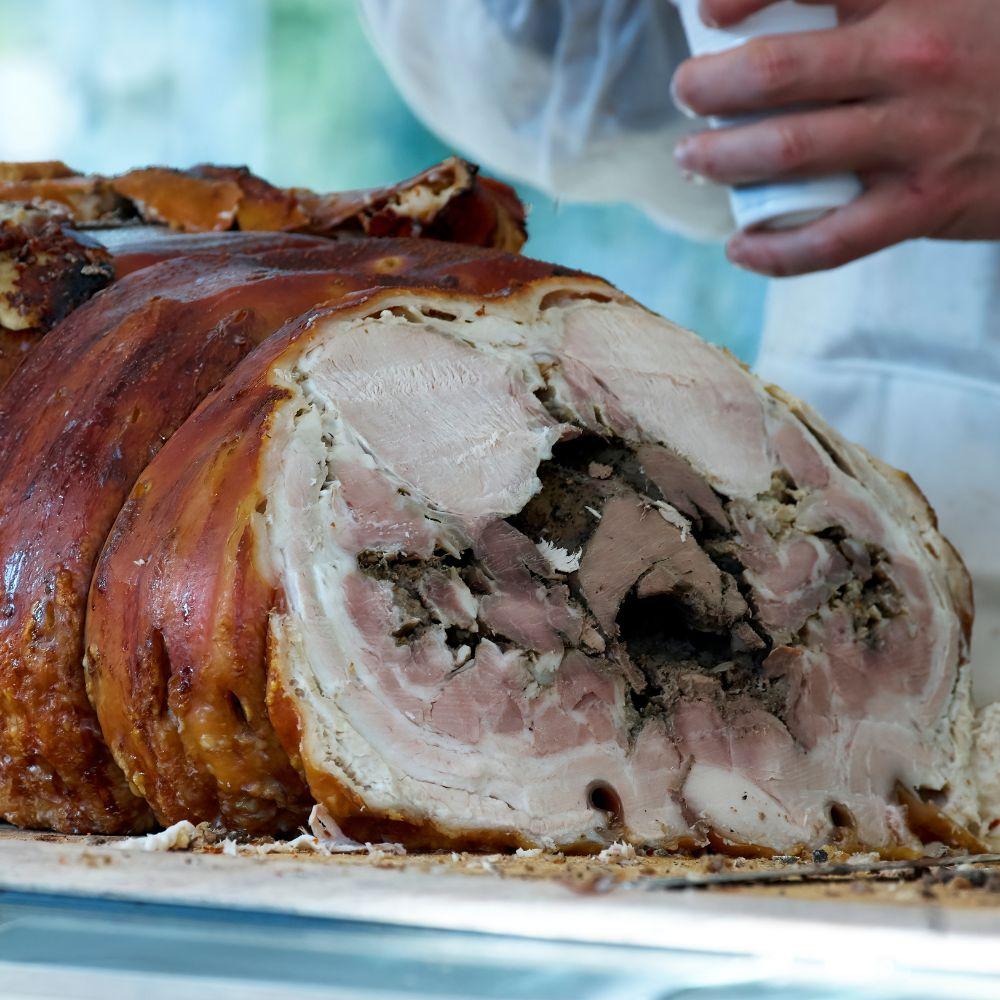
What makes it distinctive is the contrast in every slice: skin roasted until it shatters, meat so tender it barely needs a knife, and an aromatic core of fennel, garlic, salt, and pepper running through the middle. Porchetta is not simply roast pork. It is a specific preparation with its own techniques, its own regional pride, and its own rules about what counts as the real thing.
This guide covers what porchetta is, how it is traditionally made, and where to taste it the way Romans and their neighborhoods in Lazio have for generations.
What is Porchetta?
Before the history and the technique, here is the question most visitors actually search for: What is porchetta? What part of the pig goes into it?
At its core, porchetta is a whole, deboned pig, or more commonly today a large cut like the belly wrapped around the loin, seasoned generously, rolled into a tight cylinder, and slow-roasted until the skin turns to crackling and the meat stays moist. The boning allows even seasoning through every layer, so each slice shows off a cross-section of lean meat, fat, and herbs.
Salt, garlic, and black pepper form the base, while wild fennel gives porchetta its unmistakable anise-like note. The layer of fat between meat and skin renders slowly during roasting, basting the pork from within. Recipes shift slightly from one norcino, the traditional pork butcher, to the next, but the idea stays the same: humble cuts of pork turned into something worth waiting in line for.
The History of Porchetta in Central Italy
Porchetta's exact origin is impossible to pin down with certainty, and that uncertainty is part of its charm. What is clear is how it is tied to the identity of central Italy, and Lazio especially.
For centuries, porchetta showed up wherever people gathered to celebrate: village festivals, weekend markets, family reunions. It was sliced to order from a cart, wrapped in paper, and eaten standing up. Some local traditions trace the practice back thousands of years to pre-Roman communities, though that timeline sits closer to legend than documented fact.
One town claims a particularly strong bond with the dish: Ariccia, in the Castelli Romani just southeast of Rome. Over generations, what began as festival food and a way to feed a crowd grew into one of the most recognizable examples of Italian street food anywhere.
Why Is Ariccia Porchetta Famous?
If porchetta has a hometown, most Italians point to Ariccia without hesitation.
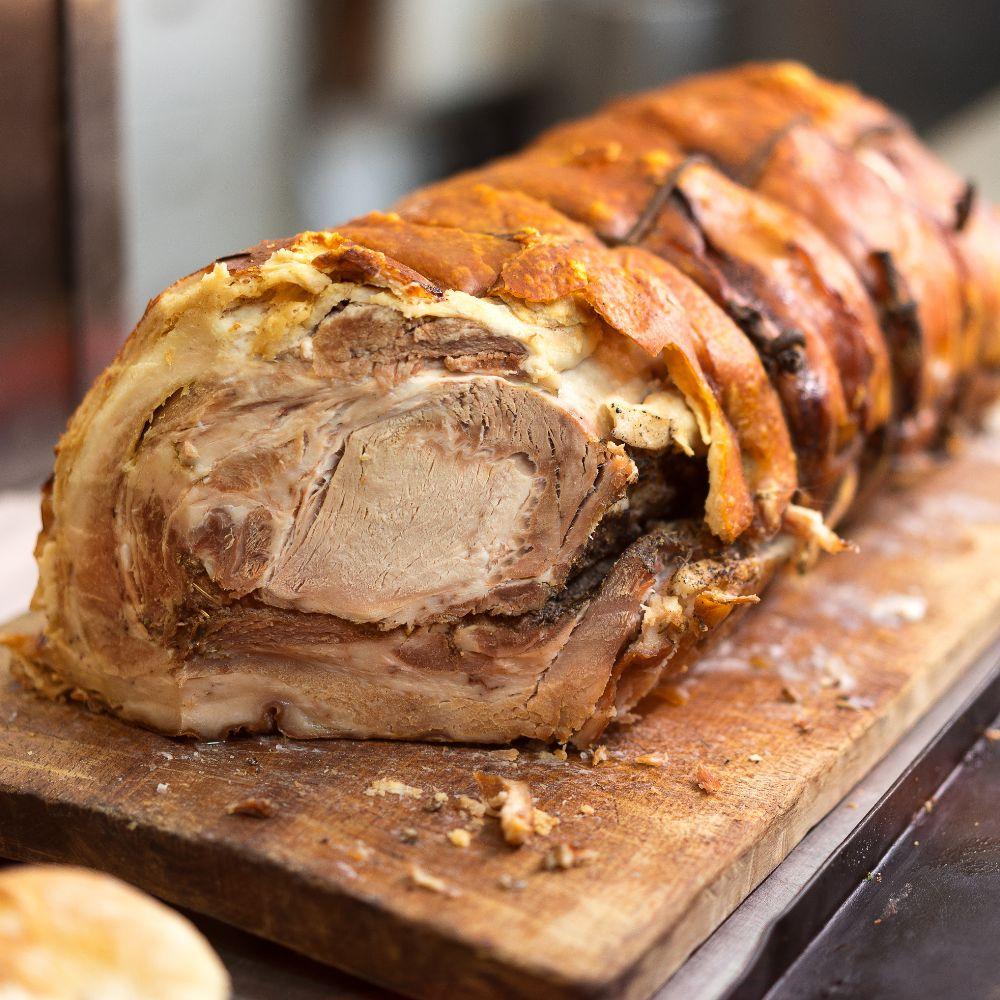
Porchetta di Ariccia carries official recognition as a traditional agricultural food product, reflecting how tied this preparation is to a specific place. Local norcini have refined the technique for generations, resulting in a porchetta known for its balance: skin roasted to an even crackle, meat kept moist through a slow, low-temperature cook, and a seasoning built heavily around wild fennel and garlic.
Every year since 1950, the town has celebrated with the Sagra della Porchetta di Ariccia. Walking through its historic fraschetta, small taverns built into old wine cellars, shows just how central this dish remains to daily life there, not only to tourism.
What Goes into an Authentic Porchetta Recipe?
A real porchetta recipe is less about exact measurements and more about understanding what each ingredient does.
Pork, Herbs, and Traditional Seasonings
Good pork sits at the center, ideally a cut with both lean meat and a generous layer of fat to keep the roast from drying out over hours in the oven. Salt is applied generously, since it needs to season meat several inches thick. Garlic and black pepper round out the base, while wild fennel supplies the aromatic backbone. Quality matters more than quantity here: a handful of fresh ingredients beats a cabinet of dried spices every time.
How to Make Traditional Porchetta
Authentic porchetta is a genuine undertaking, closer to a weekend project for a skilled butcher than a Tuesday dinner. Understanding the process makes every bite taste even better.
Prepare and Season the Pork
The pork is opened or deboned as needed, laid flat, and seasoned generously across every surface, so no section of the roast ends up bland while another is overseasoned.
Roll and Tie the Porchetta
The seasoned pork is rolled tightly into a cylinder and tied securely with kitchen twine. A loosely rolled porchetta cooks unevenly, and the layered look that makes each slice so striking only holds when the roll keeps its shape.
Roast Slowly for Tender Meat and Crispy Skin
The roast then cooks low and slow for hours, aiming for tender, succulent meat under deeply golden, genuinely crunchy skin. Exact timing depends on the cut and its weight, which is why experienced norcini rely on instinct rather than a fixed clock.
What Does Porchetta Taste Like?
For first-timers, porchetta is best understood through contrast, since contrast is the whole point of the dish:
- Crispy, savory skin that shatters rather than chews
- Juicy, tender pork seasoned all the way through
- A distinct fennel and herb aroma that lingers after each bite
- A rich flavor that never quite tips into heavy, thanks to the balance of lean meat and fat
How to Eat Porchetta: From Festival Food to the Classic Sandwich
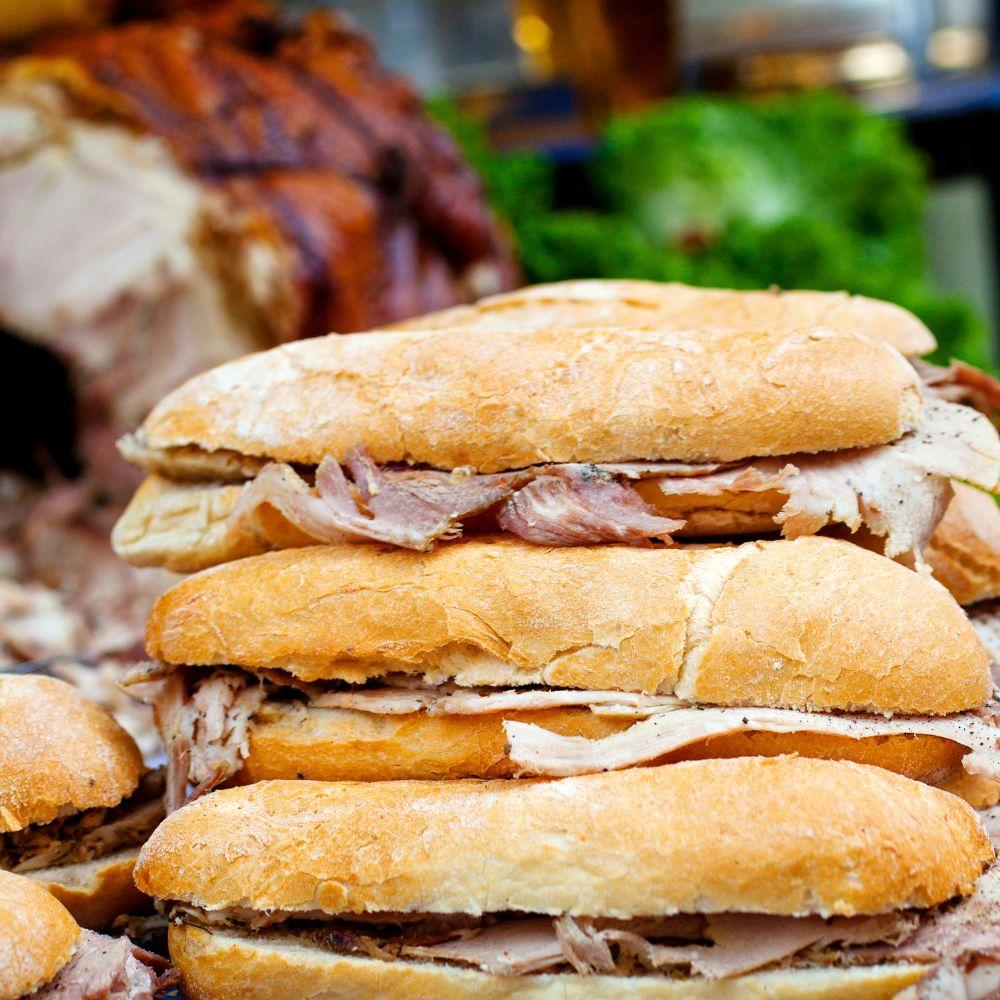
The most beloved way to enjoy porchetta is deceptively simple: thick slices piled into fresh, crusty bread. That is the porchetta sandwich, a staple at markets, festivals, and hole-in-the-wall shops across Rome and Lazio.
Plain bread acts as a neutral stage, letting the fatty, aromatic pork take the spotlight. It is street food in its purest form, wrapped in paper and eaten with your hands. Beyond the sandwich, porchetta also holds its own sliced onto a plate as part of an antipasto spread or a larger, shared feast.
Where to Eat Porchetta Near Rome
Travelers looking for Porchetta near Rome have more options than a single recommendation could ever cover.
Ariccia: The Classic Destination for Porchetta
For anyone who wants the dish closest to its roots, the short trip out to Ariccia is worth it. Between the historic fraschette and the town's ongoing relationship with porchetta, it offers context you will not find anywhere else.
Finding Porchetta in Rome
Inside the city, porchetta turns up in food markets, historic alimentari, bakeries, and street food counters across neighborhoods like Campo de' Fiori and Testaccio. Rather than chasing one specific address, since shops change, it helps to know what a genuine experience looks like: freshly cut slices, an aroma of herbs rather than packaging, and a counter that has clearly been doing this a while.
How to Recognize Good Porchetta
A few details separate an unforgettable porchetta from a forgettable one:
- Skin that looks and sounds crisp, not soft or rubbery
- Meat that appears moist, never dry or crumbly
- Visible herbs and seasoning throughout each slice
- Portions cut fresh to order, not pre-sliced for hours
- A clear balance between lean meat and fat
Porchetta Pronunciation: How to Say It Like an Italian
A quick note before you order: porchetta is pronounced por-KET-Tah. In Italian, "ch" before an "e" or "i" makes a hard "k" sound, so it is never "por-CHET-tah".
Porchetta and the Roman Street Food Tradition
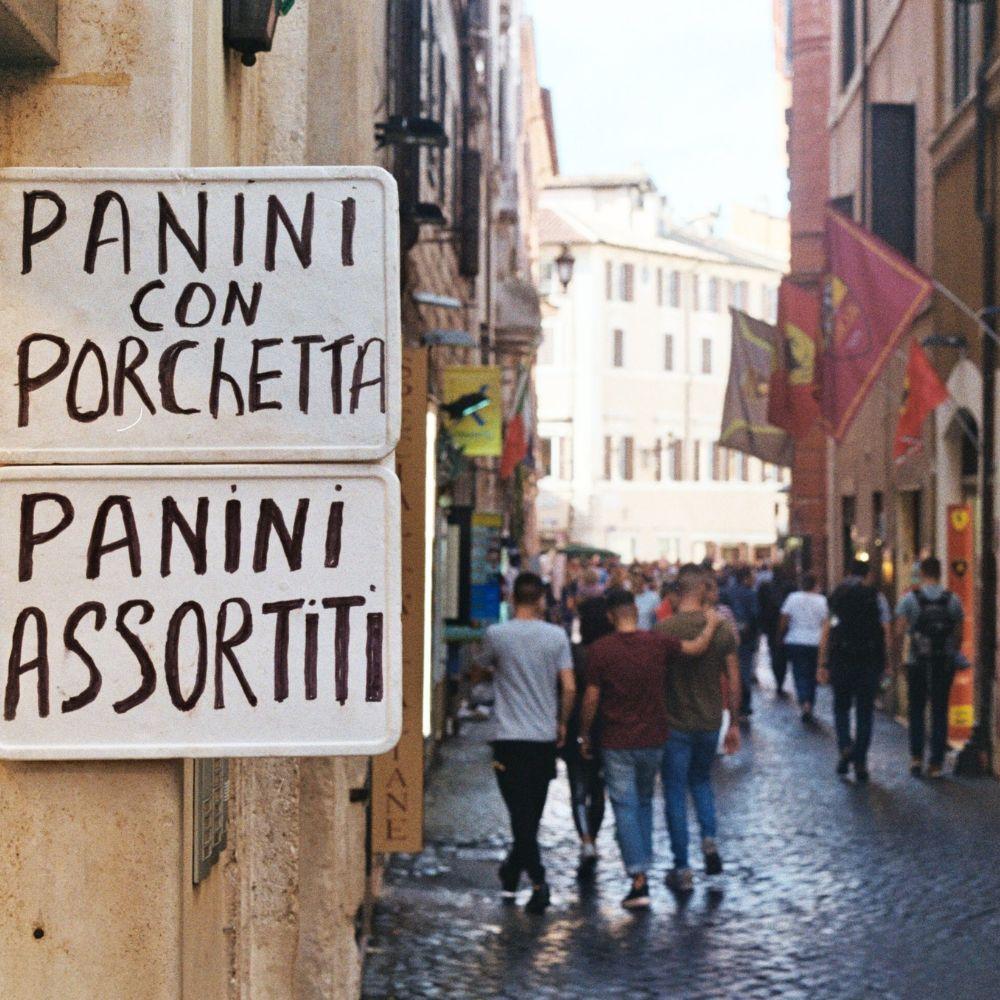
Porchetta belongs to a wider family of Roman street food that says just as much about the city's character. Supplì, pizza al taglio sold by weight, and trapizzino, the pocket sandwich filled with slow-cooked classics, all share the same spirit: bold flavors, no formality, food built to eat while you walk.
Understanding Roman food means looking beyond pasta. The city's real culinary personality often shows up fastest at a market stall, not a white tablecloth.
Discover Porchetta and Rome's Street Food with InRome Cooking
Reading about porchetta is one thing. Standing in a Roman piazza with the smell of it in the air, guided by someone who can explain why this particular slice tastes the way it does, is a different experience entirely.
That is where our Trastevere Evening Stroll comes in. Wandering through one of Rome's most atmospheric neighborhoods, you will taste a rotating cast of local specialties, from crispy supplì to Roman-style pizza al taglio, alongside a sit-down pasta course and local wine, while your guide fills in the stories behind what you are eating.
Taste Authentic Roman Street Food with InRome Cooking
Porchetta is best understood in context, with someone beside you who knows why a certain fennel note matters. Reading about it can only take you so far.
If this guide has left you hungry to taste Roman food culture firsthand, our Eat the Vibes of Trastevere Private Tour is where information turns into experience. Come with an appetite, and leave with a real feel for what makes Roman street food unforgettable.
Back to top