Sitting down at a table in Italy is an entry point into a different way of thinking about meals, time, and the people you share them with. For many Americans traveling to Italy, the first surprise is not the taste of the food itself, but the rhythm around it: courses that arrive one at a time, waiters who never seem to rush you toward the bill, tables that stay set long after the last plate has been cleared.
Italian Dining Etiquette: Do's and Don'ts for Visitors
Published on

None of this means visitors need a manual to survive dinner in Rome. Italian meals tend to be more structured, dishes follow a traditional sequence, and food is treated as something to linger over rather than consume quickly. Understanding these patterns makes the experience richer, not more intimidating.
Worth saying clearly: Italy is not a single monolith with one strict rulebook. Habits shift from Rome to Milan to a small trattoria in Puglia, and they shift between generations too. What follows are patterns worth knowing, not commandments carved in stone.
Italian Table Manners Every Visitor Should Know
Before getting into courses, ordering, and coffee, it helps to understand the basic behaviors around the table itself, the small details locals absorb without ever thinking about them.
Nothing here requires formal training. A little attention goes a long way toward feeling at ease rather than out of place.
How to use the table setting
An Italian table setting is usually simple: a plate, a fork and knife, sometimes a smaller fork for a first course, a glass for water and one for wine. The napkin sits folded beside the plate and stays on your lap, not tucked into a collar.
Cutlery signals more than people expect. Resting fork and knife parallel across the plate, tines facing up, tells the waiter you are finished.
Bread, olive oil, and other things on the table
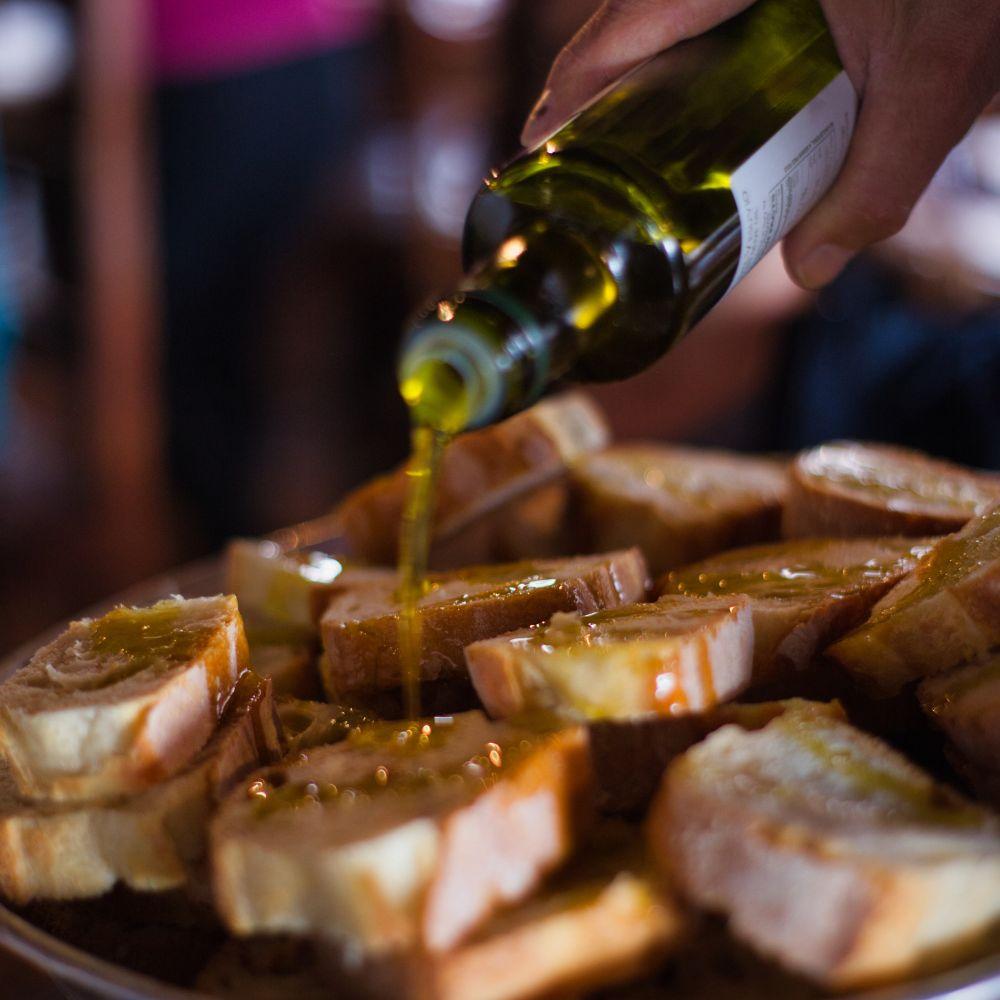
Bread almost always arrives at an Italian table, but it rarely plays the role it does in the United States. It is not an appetizer meant to curb your hunger, and in most traditional restaurants you won't find olive oil served for dipping.
Instead, bread accompanies the meal, useful for mopping up sauce. Olive oil, when it appears, is part of the cooking itself, drizzled over a finished plate or used to dress salad.
Keep your hands visible and mind your posture
One habit that surprises many first-time visitors is the Italian tendency to keep both hands resting on the table, rather than one hand in your lap. It is less a strict rule than a natural posture, born from a culture where meals are social events built around conversation as much as food.
Speaking volume rises and falls with the mood of the table, and gesturing while talking is completely normal, never impolite.
How an Italian meal is traditionally structured
Understanding the shape of an Italian meal explains almost everything else here. Once you know how courses flow, ordering, pacing and even the cappuccino rule start to make sense.
A traditional meal, particularly at lunch or dinner in a proper restaurant, moves through several stages, and no one expects you to order all of them every time.
- Antipasto, a starter meant to open the appetite, often cured meats, cheese, or bruschetta;
- Primo, the first course, typically pasta, risotto, or soup
- Secondo, the second course, usually meat or fish
- Contorno, a side dish ordered separately from the secondo, such as vegetables or potatoes
- Dolce, dessert, followed by coffee
The distinction between primo and secondo trips up most visitors. Pasta in Italy is a first course in its own right, not a side dish next to your meat. Vegetables and potatoes work the same way: they are contorni, ordered on their own rather than bundled with your secondo.
How to order at an Italian restaurant
Ordering in Italy follows its own logic, and knowing it in advance turns a potentially confusing first meal into a smooth one.
Don't expect everything to arrive at once
Courses come out one at a time, spaced so each dish can be enjoyed on its own. Your primo arrives, gets cleared, and only then does your secondo follow. The meal is meant to be experienced, so it has to be slow.
Understanding the difference between a primo and a secondo
Primo is the main pasta or rice dish; secondo is what Americans would call the "main course", usually protein-based. Ordering cacio e pepe doesn't mean choosing a side; it means choosing your first course. A typical Roman lunch might be carbonara as primo, followed by grilled chicken with roasted potatoes as secondo and contorno. You can order just one, or the full sequence.
Ask for substitutions, but understand Italian restaurant culture
Dietary needs and allergies are taken seriously, and asking about ingredients is completely normal. What's less common is the level of customization many Americans expect at home. Traditional recipes tend to be respected as they are. Ask questions freely, just don't assume every dish can be rebuilt on request.
The biggest Italian food Etiquette do's
Some habits make an Italian meal genuinely more enjoyable for you and everyone at the table.
- Take your time; lunch and dinner are rarely rushed, and no one will bring the check the moment you finish.
- Ask about a dish you don't recognize; curiosity is read as a genuine interest, not ignorance.
- Respect the sequence of courses rather than combining everything into one plate
- Use your fork properly for pasta, twirling long noodles against the side of the plate or bowl
- Stay open to regional specialties, even the ones that sound unfamiliar
Don't order a cappuccino with a full meal
Cappuccino and other milk-based coffees belong to the morning, paired with a cornetto before ten or eleven. Ordering one after lunch or dinner is considered unusual, tied to the belief that milk sits heavy on a stomach that just finished eating. No one refuses to serve you, but locals nearby might glance over with quiet amusement. Espresso is the traditional choice after a meal.
Don't ask for Parmesan on every Pasta dish
Grated cheese isn't automatically appropriate for every pasta. Seafood-based pasta, in particular, is traditionally served without cheese, since its sharp flavor can overpower delicate clams, shrimp or fish. If unsure, just ask the waiter.
Don't cut long pasta with a knife
Spaghetti and similar long shapes are meant to be twirled around a fork, ideally against the curve of the plate, rather than cut with a knife. It's one of the most talked-about Italian food etiquette rules, and genuinely one of the first things locals notice. Twirling gracefully; most Italians picked it up as kids.
Don't rush through the meal
A lunch in Rome can easily stretch past an hour, with conversation flowing between courses rather than everyone racing toward dessert. Treating a meal as something to rush through goes against the entire spirit of Italian dining. Slowing down isn't just tolerated; it's the whole point.
Italian Coffee etiquette: what to know after the meal
Coffee in Italy comes with its own small set of customs, most of them centered on one word: caffè.
When an Italian orders "un caffé", they mean a straight shot of espresso, quick and usually drunk standing at the bar. There is no American-style "regular coffee" on most menus, and asking for one will likely earn a puzzled look. Cappuccino belongs to the morning; espresso is appropriate any time, including right after a meal.
Ordering a straightforward espresso after your meal is always a safe, authentic choice. Want milk later in the day? Nobody will stop you; just don't expect a local to order the same.
It is rude to ask for...? Common Italian dining questions answered
Some of the most common worries visitors bring to an Italian table are less about big rules and more about small, specific situations.
Is it rude to ask for tap water in Italy?
Not rude, though many restaurants default to bottled water, still or sparkling, rather than tap. Some will happily bring acqua del rubinetto if you ask; others only serve bottled.
Is it rude to share a dish?
In casual settings, sharing is common. In more traditional restaurants, portions are designed as individual courses, so splitting a single primo three ways might get a puzzled look.
Can you ask for a doggy bag in Italy?
This is one of the fastest-changing habits in Italy. Once unusual, attitudes have shifted considerably in the cities with heavy tourist traffic, and many restaurants today are happy to pack up leftovers.
Do you have to finish everything on your plate?
There is no unwritten law requiring a spotless plate, though Italian culture carries a strong appreciation for not wasting food. Leaving a reasonable amount because you're full is completely normal.
Italian dining etiquette myths tourists should ignore
A lot of exaggerated "rules" circulate online, the kind that make Italian dining sound like a minefield rather than one of the most welcoming food cultures in the world.
Italians are not silently judging every small mistake, and no single rulebook applies identically from Rome to Naples to Turin. Ordering something "the wrong way" isn't automatically read as an insult, and most restaurant staff are far more forgiving than internet lists suggest.
The real takeaway: you don't need to behave like a native Roman to enjoy a meal in Italy. A bit of awareness, curiosity, and genuine respect for the people serving you will carry you through almost any table in the country.
Experience Italian food culture with InRome Cooking
Reading about Italian dining etiquette is a good starting point, but there's only so much a list of do's and don'ts can teach you. The real understanding comes from standing in a Roman kitchen, learning why a sauce is built the way it is from someone who grew up eating it that way.
If you want to go beyond the restaurant table, explore InRome Cooking's food experiences in Rome, and discover Italian cuisine through hands-on cooking classes and local culinary traditions.
Back to top