Before Carbonara, before Amatriciana, there was Gricia. Often called the mother of all Roman pastas, this humble yet powerful dish is the foundation of Rome’s pasta tradition. At first glance, it seems simple: just pasta, guanciale, Pecorino Romano, and black pepper. But ask any Roman, and they’ll tell you: it’s deceptively simple. Every bit reveals centuries of tradition, technique, and taste passed down from shepherds to trattorie chefs.
Gricia: The Mother of all Roman Pastas

If you’ve ever fallen in love with a forkful of Carbonara or Amatriciana, you have Gricia to thank. Without her, those classics would never exist.
What does “Gricia” Mean in Italian?
Before we taste it, let's understand it. The word “Gricia” likely comes from Grisciano, a small village in the Lazio region, not far from Amatrice. It’s a dish that predates the arrival of tomatoes in Europe, which means Gricia is as ancient and as authentic, as Roman cooking gets.
Known as one of the four great Roman pastas (alongside Carbonara, Amatriciana, and Cacio e Pepe), Gricia is the purest expression of the city’s culinary DNA: few ingredients, bold flavor and no shortcuts.
The History of Pasta alla Gricia
Centuries ago, Roman shepherds roamed the hills of Lazio carrying only ingredients that would last through the seasons: cured pork cheek (guanciale), aged sheep’s cheese (Pecorino Romano), and dried pasta. Out of these simple staples, Pasta alla Gricia was born.
This was food made by survival - but elevated by instinct. The fat from the guanciale created a rich base, the Pecorino added salt and depth, and black pepper brought warmth. Together, they created a dish that was rustic, nourishing, and uniquely Roman. In many ways, it’s the flavor of the countryside that built the Eternal City.
Gricia Ingredients: What You Really Need
At its heart, Gricia is minimalism perfected. Four ingredients, no extras, no excuses.
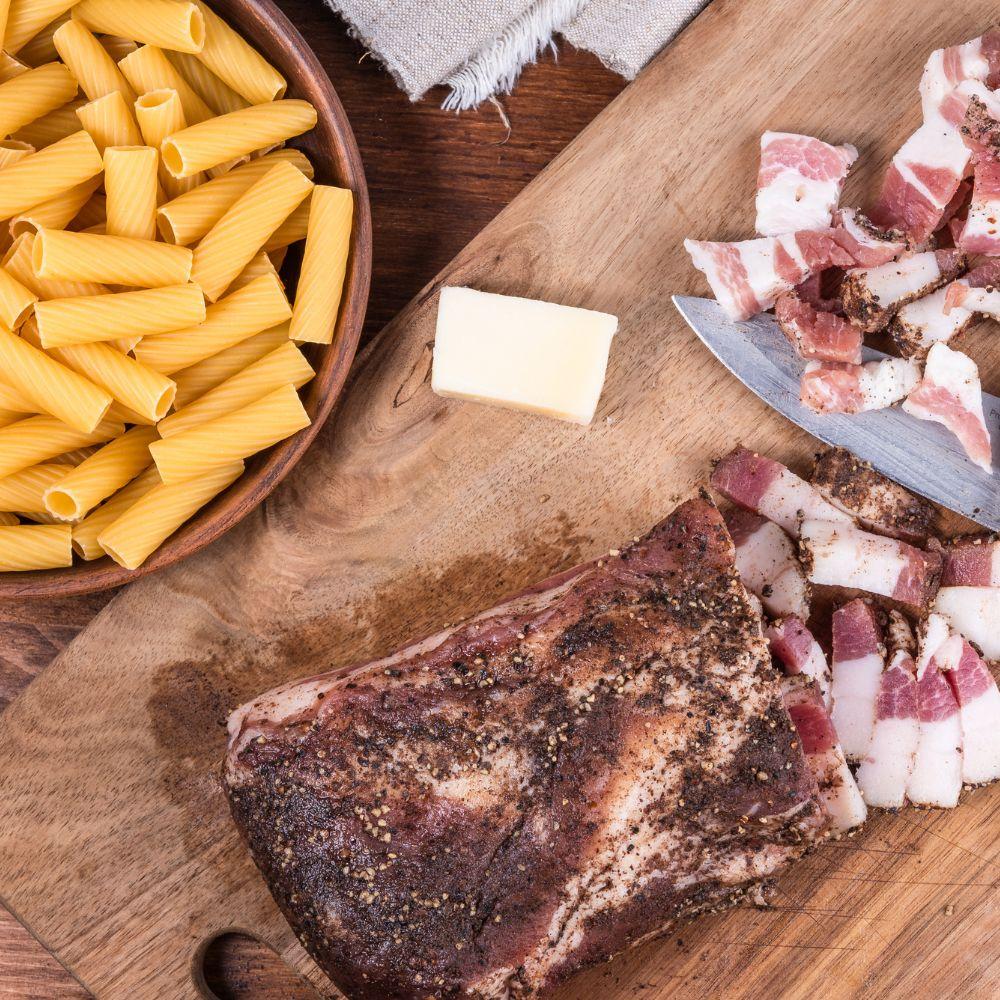
- Guanciale - Cured pork cheek. It renders beautifully and gives that unmistakable Roman aroma. Pancetta is not the same - don’t even think about it!
- Pecorino Romano - Sharp, salty, and proudly local. This cheese defines Roman pasta sauces.
- Black Pepper - Freshly cracked, generously sprinkled. It ties everything together with a spicy edge.
- Quality Pasta - Choose rigatoni, mezze maniche, or spaghetti. The rougher the surface, the better it will hold the sauce.
No cream, no onion, no garlic, no pancetta. True Roman cooks keep it clean, letting techniques - not extras - create that luscious creaminess.
How to cook Pasta alla Gricia Step by Step
Cooking Gricia isn’t hard, but it is a lesson in balance. Here’s how to master it like a Roman:
- Render the Guanciale - Slice into thick strips and cook slowly in a pan until golden and crisp. Save every drop of that glorious fat,
- Cook the pasta - In salted water (remember, pecorino is salty too), boil until just al dente
- Make the Sauce - Add a splash of pasta water to the guanciale pan and swirl. The starch combines with the rendered fat to create a skilly emulsion.
- Add Pecorino Romano - Off the heat, toss pasta with grated Pecorino and more pasta water as needed. Stir until glossy and creamy - ever clumpy
The starch from the pasta and the fat from the guanciale blend to perfection when handled with care.
Gricia vs Other Roman Pastas
Roman pastas are like a family, each one related, but with its own personality. Here’s how Gricia fits in:
Gricia vs Carbonara
Carbonara is essentially Gricia with eggs. The rich yolks add a custardy depth, turning the humble shepherd’s dish into one of Italy’s most famous exports. But the base - the guanciale, Pecorino, and pepper - is pure Gricia.
Want to discover more about Carbonara’s History? Read our full article!
Gricia vs Cacio e Pepe
Cacio e Pepe is the simplest sibling - just cheese, pepper and pasta. Think of Gricia as the in-between pasta: more flavorful than Cacio e Pepe, but lighter than Carbonara. It’s the perfect midpoint of Roman perfection.
Variations of Pasta alla Gricia
Purists will tell you Gricia must never change, and they’re not wrong. But in Rome’s trattorias, you might encounter seasonal twists: artichoke Gricia in spring, zucchini Gricia in summer, or even truffle Gricia in fall.
These versions are delicious homages, but remember: true Pasta alla Griciaa needs no embellishment. Just the crackle of guanciale and a snowfall of Pecorino Romano.
Wine Pairing with Pasta alla Gricia
Roman food loves Roman wine. To balance the richness of Gricia:
- White Option: try a crisp Frascati Superiore DOCG - its minerality cuts perfectly through the salty cheese and guanciale.
- Red Option: A Cesanese del Piglio or a light Montepulciano from Lazio complements the dish with gentle tannins and a touch of spice.
The rule? Nothing too heavy. You want the wine to lift, not overpower, that creamy Pecorino magic.
Experience Authentic Roman Pastas with InRome Cooking
There’s no better way to understand Rome than through its pasta. And there’s no better way to learn Gricia with a real Roman chef - right here in the Eternal City.
At InRome Cooking, we don’t just teach recipes; we share traditions. During our Roman Pastas Cooking Class, you’ll learn to make all four iconic Roman Pastas - Gricia, Carbonara, Amatriciana, and Cacio e Pepe - from scratch, using authentic ingredients and techniques passed down through generations.
Smell the guanciale sizzling, whisk Pecorino into a creamy sauce, and enjoy your masterpiece with a glass of wine in our charming Roman Kitchen. It’s more than a class - it’s your own slice of Italian life.
Ready to taste the real Rome? Join us and discover why Gricia truly is the mother of all Roman pastas.
Back to top