Golden, crisp and opened wide like a flower in bloom, Carciofi alla Giudia are one of those Roman dishes that make an impression before you even take the first bite. The outer leaves are thin and crunchy, almost like chips, while the heart remains wonderfully tender and slightly sweet.
Carciofi alla Giudia: How to Prepare Jewish Artichokes
Published on
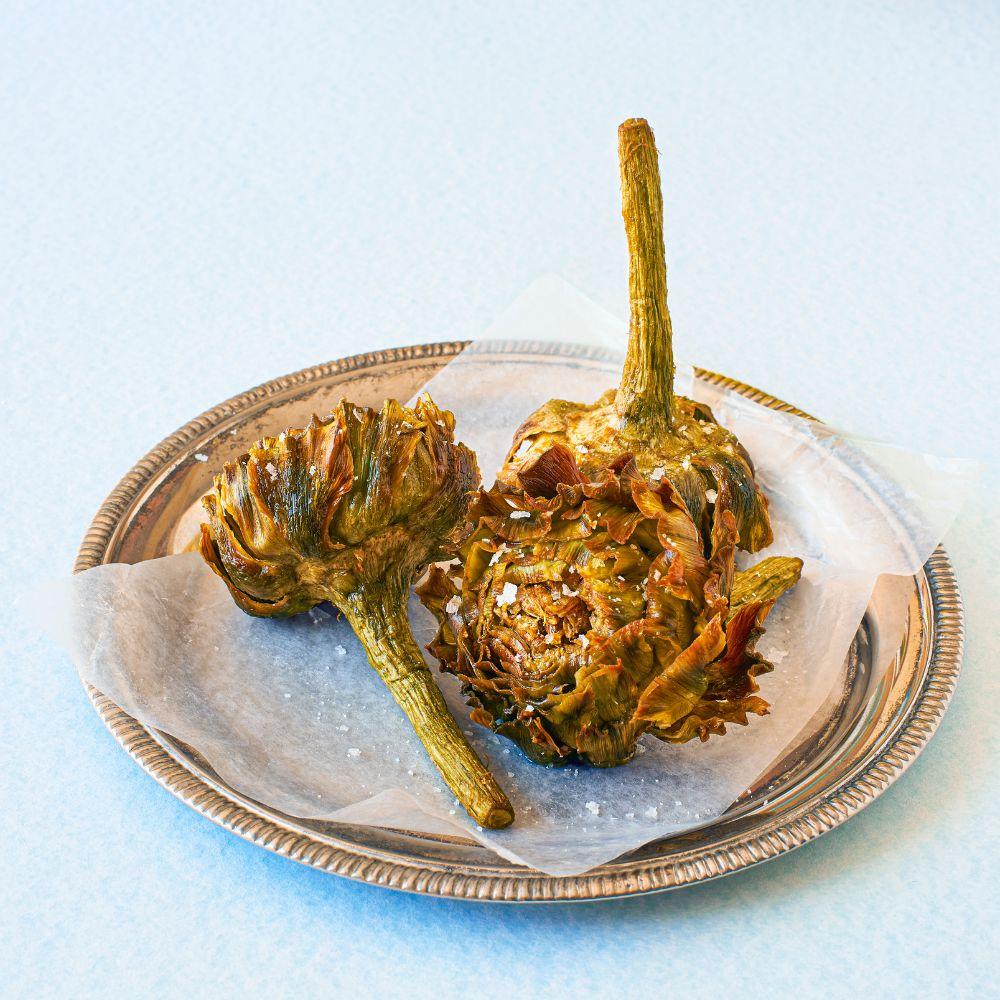
Known in English as Jewish artichokes or Jewish-style artichokes, this centuries-old recipe is closely connected to Rome's historic Jewish community and today stands among the most recognizable dishes of the Eternal City.
If you are wondering what Carciofi alla Giudia are, when to eat them in Rome, or how to recreate them at home, here is everything you need to know: from their history and seasonality to the traditional double-frying technique that gives them their unmistakable texture.
What are Carciofi alla Giudia?
Carciofi alla Giudia are whole artichokes that are carefully trimmed, opened, and deep-fried until their leaves become golden and crisp. Unlike many fried artichoke recipes, there is no batter or breadcrumb coating. The artichoke itself is the star.
The Italian expression alla giudia means "Jewish style" and points directly to the dish's origins in Rome's Jewish culinary tradition. You will find it particularly associated with the historic Jewish Ghetto around the Portico d'Ottavia, where it remains one of the area's signature specialties.
One detail often causes confusion among international visitors: "Jewish Artichokes" is not a particular variety of artichoke. The English name refers to the preparation, while the traditional recipe is usually made with Romanesco artichokes.
The history of Carciofi alla Giudia in Rome's Jewish Ghetto
To understand this dish properly, it helps to know a little about Roman Jewish cuisine, a culinary tradition shaped over centuries in one of Europe's oldest Jewish communities.
Jewish life in Rome stretches back more than two millennia. In 1555, Rome's Jewish population was forced to live within a designated Ghetto near the Tiber, where a distinctive cuisine developed from religious traditions, seasonal ingredients and the foods available in and around the city.
Frying became particularly important in Roman Jewish cooking, and artichokes were ideally suited to the technique. Prepared whole and cooked in hot oil, their leaves separate and crisp while the center becomes tender.
Over time, Carciofi alla Giudia moved far beyond the boundaries of the Jewish Ghetto. Today they appear on menus throughout Rome and are considered as Roman as many of the city's famous pasta dishes.
That journey also says something important about Roman cooking itself. Rome's culinary identity was never created in isolation. Jewish and Roman traditions influenced one another for generations, and some dishes are now so deeply embedded in the city's food culture that separating one influence from the other is almost impossible.
Carciofi alla Giudia may be the clearest - and certainly one of the most delicious - examples.
Why are Roman Artichokes unique?
If you have only encountered the pointed, rather intimidating artichokes commonly sold in American supermarkets, the Roman artichoke can be a pleasant surprise.
The variety traditionally associated with both Carciofi alla Giudia and Carciofi alla Romana is the carciofo romanesco, also known locally as the mammola. Its shape and texture make it particularly suited to Roman recipes.
Romanesco artichokes are generally known for their:
- Rounded, compact shape
- Large and tender leaves
- Very few or no sharp thorns
- Soft, fleshy heart
- Delicate, slightly sweet flavor
Because the leaves are tender, a properly cleaned Roman artichoke can be cooked almost entirely whole. This is essential for Carciofi alla Giudia, where the outer leaves need to become crisp enough to eat while the inside remains soft.
The same variety is also ideal for braising, which explains why it appears in Rome's other great artichoke recipe: Carciofi alla Romana.
Artichoke season in Rome: When to eat Carciofi alla Giudia
There is a good reason Romans become particularly enthusiastic about artichokes toward the end of winter. Romanesco artichokes are seasonal, and their relatively short appearance at local markets makes them something to look forward to each year.
The best period for eating Carciofi alla Giudia in Rome is generally from February through April, when local Roman artichokes are at their finest. Depending on weather and availability, the season can begin slightly earlier or continue further into spring.
Walk through a Roman market at this time of year and artichokes seem to be everywhere: stacked into green-purple pyramids, trimmed by vendors at remarkable speed and carried home by locals who already know exactly how they are going to cook them.
Restaurants sometimes serve Carciofi alla Giudia outside the traditional season, but if you are visiting Rome in late winter or early spring, this is when you should make a point of ordering them.
Seasonality matters enormously in Roman cooking. The arrival of a particular ingredient changes what appears on restaurant menus and family tables, and artichoke season is one of the best examples.
For food lovers, it is also a very good excuse to visit Rome in spring, as though the warmer days, outdoor tables and afternoon aperitivo were not convincing enough already.
Ingredients for Authentic Carciofi alla Giudia
One of the pleasures of the traditional Carciofi alla Giudia recipe is how little it requires. There are no elaborate sauces and very few seasonings. Good artichokes and the right technique do almost all the work.
For approximately 4 servings, you will need:
4 large Romanesco or globe artichokes
- Olive oil or suitable frying oil, enough for deep frying
- 1 lemon
- Cold water
- Salt, to taste
- Freshly ground black pepper, optional
If you can find Romanesco artichokes, use them. Their tenderness and lack of sharp thorns make them particularly well suited to the recipe.
Outside Italy, good-quality globe artichokes can be substituted, although they may require slightly more trimming.
How to prepare Carciofi alla Giudia
Making Jewish-style fried artichokes at home is less complicated than their dramatic appearance suggests. The ingredient list is short, but the method requires a little patience.
The most important part is achieving the contrast that defines the dish: a tender center surrounded by crisp, golden leaves. Traditionally, this is accomplished through two stages of frying.
Step 1: Cleaning and trimming the artichokes
Preparing the artichokes properly is essential because the finished dish is eaten almost in its entirety.
Start by preparing a large bowl of cold water with the juice of a lemon. The acidulated water will help prevent the artichokes from turning brown while you work.
Remove the toughest outer leaves until you reach the softer, paler layers underneath. Using a sharp knife, trim the top of the artichoke and carefully pare away the tough exterior of the stem, keeping part of the stem attached.
If necessary, remove any fibrous or fuzzy material from the center. Place each cleaned artichoke directly into the lemon water while you prepare the others.
Before frying, drain and dry the artichokes extremely well. Water and hot oil are never a good combination, so take the time to pat them thoroughly dry.
Step 2: Opening the artichoke like a flower
The characteristic flower shape of Carciofi alla Giudia does not happen entirely by accident.
Once the artichokes are cleaned and dry, gently loosen the leaves with your fingers. Traditionally, Roman cooks may tap the artichokes against a work surface or gently against one another to encourage the leaves to separate.
Do not force them completely open at this stage. The goal is simply to loosen the compact leaves so that heat can reach between them during frying.
After the first fry, they will be softened enough to open much more easily into their famous flower shape.
Step 3: Double frying for maximum crispness
This is where the transformation happens.
Heat the frying oil to approximately 300°F / 150°C. Carefully lower the artichokes into the oil and fry, them until the hearts have softened, usually around 8-12 minutes depending on their size.
Remove them from the oil and allow them to drain and cool slightly.
Now gently press and open the softened leaves outward until each artichoke resembles a wide flower.
Increase the oil temperature to approximately 350–360°F / 175–180°C and return the artichokes to the pan, flower-side down. Fry for another minute or two, until the outer leaves are deeply golden and crisp.
Drain thoroughly, season immediately with salt and serve hot.
That second fry is the crucial moment. The first cooks the vegetable; the second creates the crisp, almost brittle leaves that make authentic Carciofi alla Giudia so addictive.
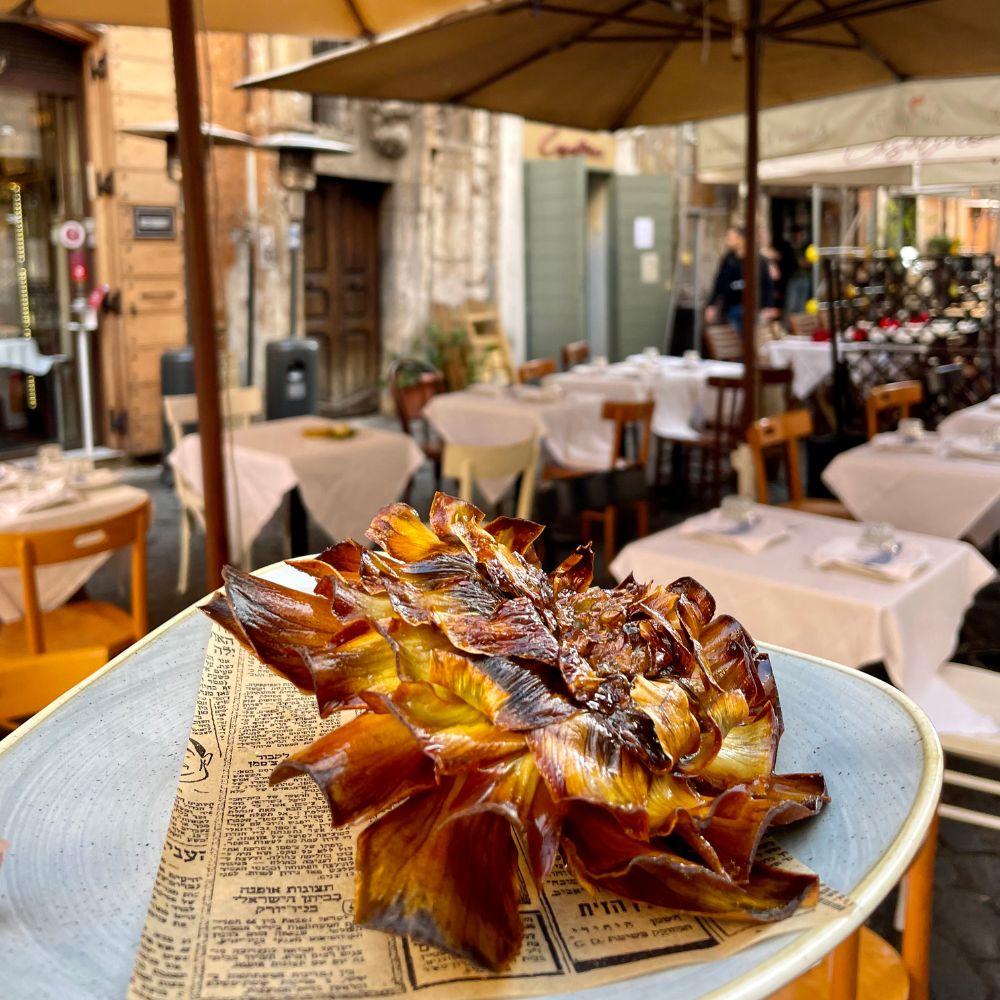
What do Carciofi alla Giudia taste like?
The best Carciofi alla Giudia give you two completely different textures in a single artichoke.
Start with the outside and the thin leaves break apart with a satisfying crunch. Their flavor becomes deeper and slightly nutty during frying, with just enough salt to make reaching for another leaf almost automatic.
Move toward the center and everything changes. The leaves become softer and more succulent until you reach the heart, which is tender, delicate and subtly sweet.
That progression from crisp exterior to buttery-soft center is what distinguishes this kind of artichoke from other preparations.
And yes, you really do eat the crispy leaves. For anyone accustomed to scraping a tiny amount of flesh from steamed artichoke leaves, that can be a revelation.
Want to see how crunchy Jewish artichokes are? Check our Instagram reel!
Carciofi alla Giudia vs Carciofi alla Romana
Rome has not one but two famous ways of preparing artichokes, and visitors frequently confuse them. Both use the same wonderful seasonal ingredient, but the cooking methods - and the final results - could hardly be more different.
If you see both Carciofi alla Giudia and Carciofi alla Romana on a menu, knowing the difference will help you decide what you are in the mood for.
Carciofi alla Giudia
From the Roman Jewish culinary tradition and fried whole.
The leaves are opened outward and become crisp and golden, while the heart remains tender. They are richer, crunchier and visually dramatic (they look like a golden, blooming flower)
Carciofi alla Romana
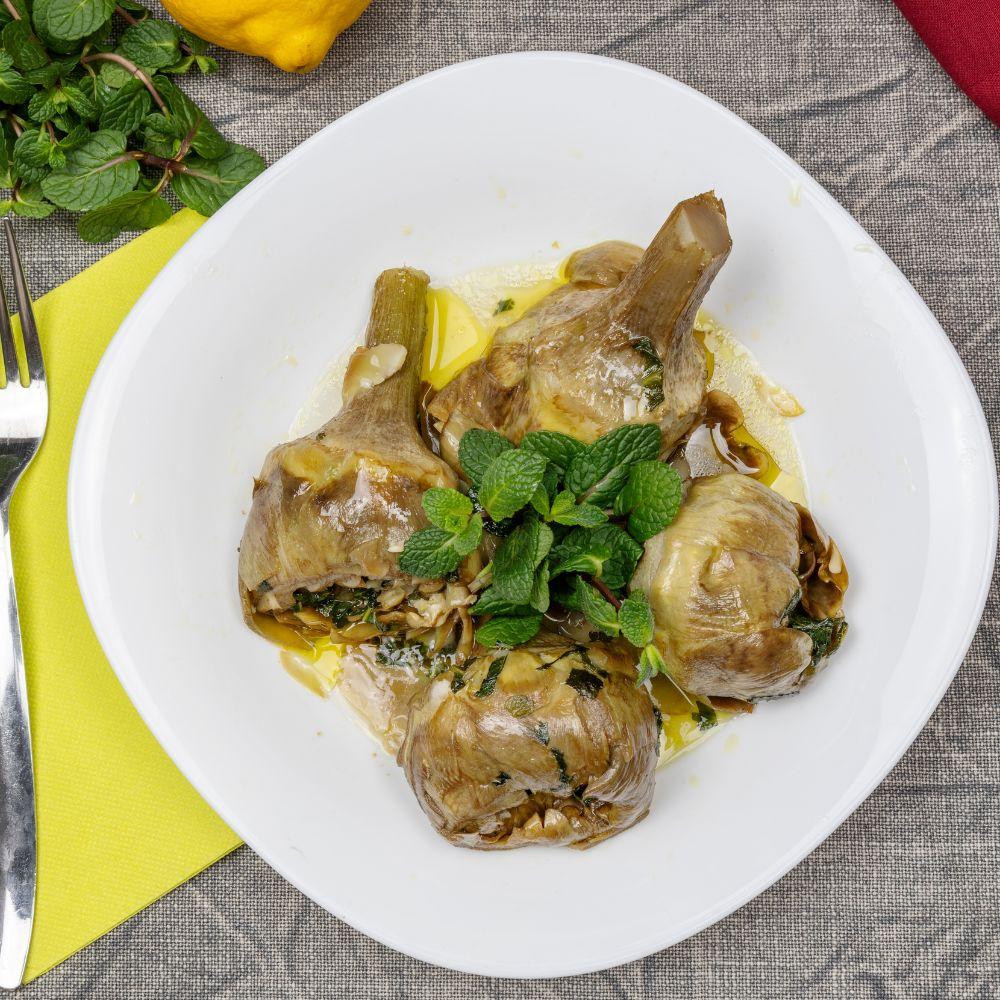
Carciofi alla Romana take the opposite approach.
Rather than frying the artichokes, Roman cooks slowly braise them with olive oil, garlic, parsley and mentuccia, the aromatic wild mint traditionally used in Roman cuisine.
The final texture is exceptionally soft and tender, with an herbal, fragrant flavor.
Which should you try? In Rome, the most impossible answer is both. Preferably while artichokes are in season.
How to eat Carciofi alla Giudia like a Roman
There is no complicated etiquette involved, which is part of the fun.
Carciofi alla Giudia are usually served hot as antipasto or contorno, either before the main course or alongside other Roman specialties.
Start with outer leaves. When they have been fried correctly, they will be light and crunchy enough to eat whole. Work your way toward the softer center before finishing with the meaty artichoke heart and stem.
Using your hands for the crisp outer leaves is perfectly reasonable. This is not the moment to become overly formal!
The main rule is simpler: eat them while they're hot. Their texture is at its best in those first few minutes after frying.
Beyond Artichokes: Other Roman dishes worth trying
Once you begin exploring traditional Roman food, Carciofi alla Giudia are only the beginning. Rome's cooking is famous for taking relatively few ingredients and turning them into dishes with an extraordinary amount of character.
Pecorino Romano, guanciale, black pepper, tomatoes, seasonal vegetables and inexpensive cuts of meat appear again and again, but small changes in technique produce completely different results.
Some essential dishes to put on your Rome food list include:
- Carbonara - eggs, Pecorino Romano, guanciale and black pepper, combined into one of Rome's most famous pasta sauces. You can learn more about this dish here.
- Cacio e pepe - an apparently simple combination of Pecorino Romano and black pepper that requires considerable skill to get it right. See our guide here.
- Amatriciana - tomato, guanciale, Pecorino Romano with a wonderfully savory, slightly spicy finish. Want to know how to prepare a true amatriciana at home? Discover our full guide!
- Gricia - often described as the ancestor of Amatriciana, made with guanciale, Pecorino Romano, and pepper but no tomato. Find out more here!
- Supplì - crisp fried rice croquettes with a melting mozzarella center, and one of the city's favorite quick bites
- Saltimbocca alla romana - tender veal prosciutto and sage
- Trippa alla Romana - slow-cooked tripe served in a rich tomato sauce, traditionally finished with Pecorino Romano and mint.
Experience authentic Roman cuisine with InRome Cooking
Reading about Roman recipes is a good start. Shopping for the ingredients at a local market and learning what to do with them beside a Roman chef is considerably more memorable.
Through InRome Cooking, our cooking experiences in the heart of Rome are designed around the way Italians actually approach food: beginning with good ingredients, respecting the season, and learning techniques that can be taken home and used again.
Seasonal vegetables play an important role. In spring, market stalls may be piled high with artichokes. At other times of year, tomatoes, zucchini, eggplants, pumpkins, fresh herbs and other local ingredients take their turn.
That means the market itself becomes part of the experience. Rather than starting from a fixed shopping list, you begin by seeing what is good right now.
Then comes the best part: turning those ingredients into lunch.
Learn to cook Rome's seasonal dishes with InRome Cooking
Want to explore Roman cuisine beyond simply ordering another plate of pasta at a restaurant?
With InRome Cooking's private Italian Sunday Lunch Experience, you begin the morning at the Campagna Amica farmers' market near the Circus Maximus alongside an English-speaking chef. You'll browse seasonal produce, choose ingredients from local vendors and learn what Romans look for when they shop for their own kitchens.
From there, you'll continue to one of our cooking schools in Rome's historic center for a hands-on class, preparing a complete Italian lunch before sitting down to enjoy what you have made with wine.
Depending on the season, the ingredients and dishes can change, which is exactly how Italian home cooking should work. Artichokes in spring, ripe produce in summer, and comforting recipes when cooler weather returns.
If discovering a destination through its markets, kitchens and dining tables sounds like your kind of Rome, explore our Cook an Italian Sunday Lunch with Farmers Market Shopping - Private Experience!
Back to top